

Destination Visioning: What Happens Before the Architects Start Drawing.
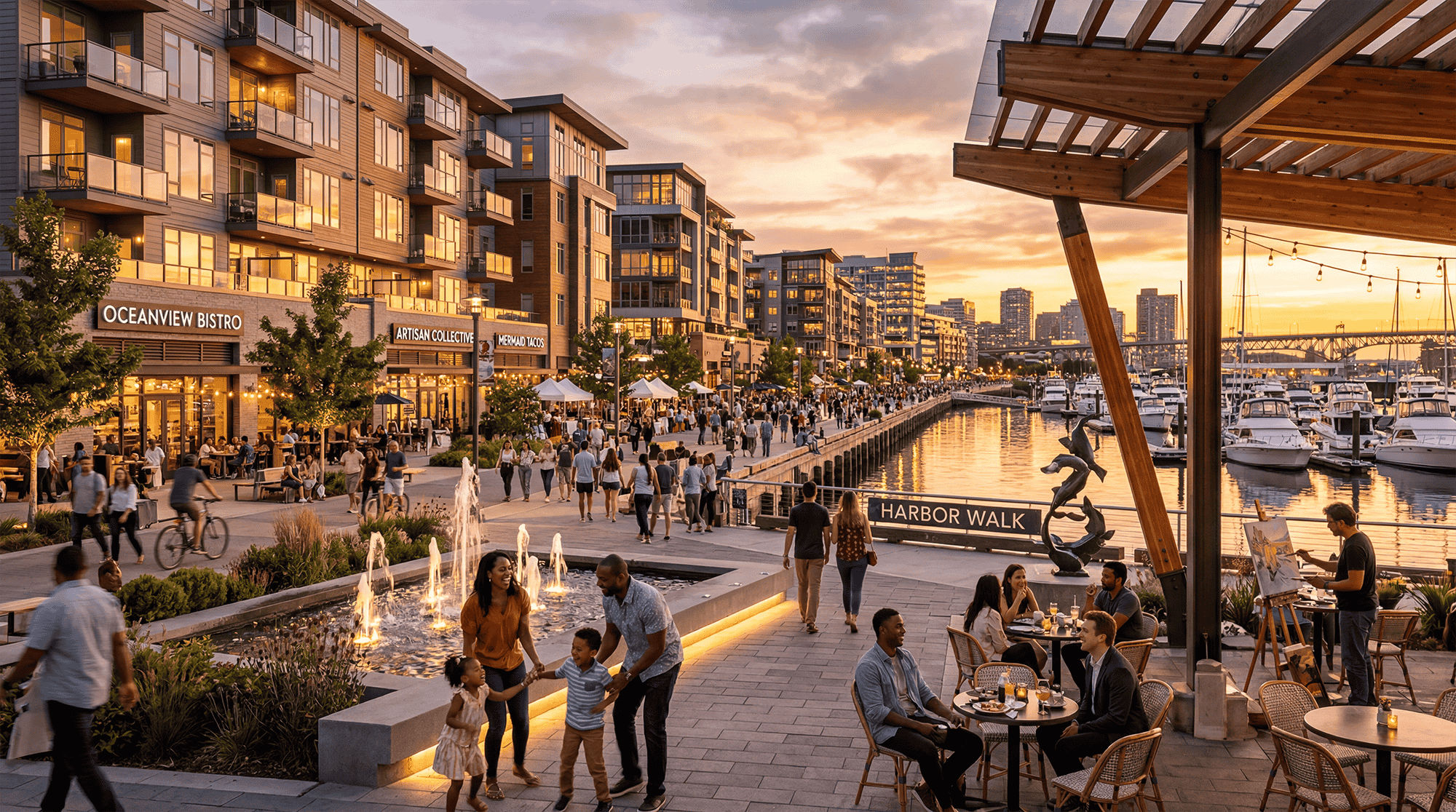
What Happens Before the Architects Start Drawing.
There’s a phase in destination development that most project timelines undervalue, compress, or skip entirely. It sits between the feasibility study and the design brief — after the numbers have been validated but before anyone starts drawing. It’s called destination visioning, and it’s the strategic work that determines whether a development becomes a genuinely distinctive place or simply another competent addition to the skyline.
Destination visioning answers the questions that design can’t answer on its own. Not “what does this place look like?” but “what is this place?” Not “how does it function?” but “what does it mean — to the people who will live here, visit here, invest here?”
These aren’t soft questions. They’re the questions whose answers determine whether a development commands premium positioning or competes on price.There's a phase in destination development that most project timelines undervalue, compress, or skip entirely — and it's the phase that determines whether a development becomes a genuinely distinctive place or simply another competent addition to the skyline. Destination visioning sits between the feasibility study and the design brief, answering the questions that design can't answer on its own: not what does this place look like, but what is this place? In this Extended Dialog, Creative Dialog examines the four phases of strategic visioning work, why the industry is finally recognising the cost of skipping it, and what recent moves like the AtkinsRéalis-Futurecity partnership signal about where destination development is heading — particularly across a Gulf region where national vision frameworks are demanding identity and experience, not just square metres.
The Gap Nobody Talks About
In a typical development process, the journey from feasibility to design brief happens fast. The business case is approved. A masterplanner or architect is appointed. The design brief is assembled from a mix of commercial requirements (programme, GFA targets, unit mix), site constraints (access, infrastructure, regulatory frameworks), and market analysis (comparable developments, competitive positioning, target demographics).
What’s almost always missing is strategic identity work. The brief tells the design team what the development needs to contain. It rarely tells them what it needs to be. This gap produces a predictable outcome: developments that function well but lack distinctive character. Buildings that are technically excellent but experientially generic. Places that are hard to criticise but easy to forget.
Destination visioning fills that gap. It establishes the strategic identity and experiential framework that transforms a collection of commercial requirements into a coherent destination concept.
What Destination Visioning Actually Involves
The visioning process typically moves through four phases, each building on the last.
The first phase is contextual immersion — understanding the site and its surroundings at a depth that goes far beyond what a standard site analysis captures. This means examining the cultural landscape, not just the physical one. Understanding the stories, traditions, and community patterns that exist in and around the site. Assessing how the surrounding area is evolving and what gaps or opportunities that evolution creates. Spending time on site at different times of day and year to understand its experiential qualities: light, wind, sound, views, thermal comfort, and the natural movement patterns of people passing through or around it.
In the Middle East, contextual immersion must account for factors that are unique to the region. Climate isn’t just a constraint — it’s a design parameter that fundamentally shapes how people experience space. Cultural considerations around privacy, hospitality, and family-oriented design aren’t optional overlays but foundational requirements. And the pace of surrounding development means that competitive context can shift dramatically during a project’s timeline.
The second phase is stakeholder intelligence — systematically understanding the perspectives, needs, and aspirations of the people who will determine the development’s success. This extends beyond the development team to include potential residents, target visitor segments, adjacent communities, local businesses, cultural stakeholders, and municipal authorities. The goal is to identify the intersection between what the market needs, what the community values, and what the site can authentically deliver.
The third phase is identity synthesis — distilling the findings from immersion and intelligence into a clear, compelling articulation of what this place should be. This involves defining the development’s core identity (its character, values, and distinctive qualities), its experiential positioning (how it should feel to be here), and its narrative architecture (the stories it will tell and the meanings it will convey).
The fourth phase is strategic translation — converting the identity synthesis into actionable frameworks that design teams can work from. This includes experience principles that guide spatial design, character guidelines for different zones or precincts, programming directions that support the identity, and brand foundations that will eventually inform visual identity, wayfinding, and communication.
Why Developers Skip It — and What It Costs
Visioning gets compressed or eliminated for understandable reasons. Development timelines are aggressive. Design teams are expensive to keep waiting. Stakeholders want to see progress, and “we’re still in visioning” doesn’t satisfy boards accustomed to construction milestones.
But the cost of skipping visioning compounds throughout the project. Without a clear identity framework, design teams make assumptions about experiential character that may or may not align with commercial objectives. Different consultants interpret the brief differently, producing work that’s individually strong but collectively incoherent. Marketing teams inherit a development with no authentic story to tell, leading to generic positioning that fails to differentiate.
The remedial costs are substantial. Design revisions to address experiential misalignment. Rebriefing consultants mid-project. Repositioning marketing that isn’t resonating. These costs typically far exceed what visioning would have cost upfront — and the results are never as good as getting it right from the start.
The AtkinsRéalis-Futurecity Partnership Signals a Shift
It’s worth noting that the industry is beginning to recognise this gap.
AtkinsRéalis recently announced a strategic partnership with Futurecity focused on cultural placemaking in the Middle East, positioning arts and culture as essential components of urban renewal from the earliest project stages. This kind of partnership — between engineering-led delivery firms and cultural strategy consultancies — signals that the market is moving toward earlier, more sophisticated strategic engagement in the development process.
The Gulf is particularly well positioned for this shift. Regional governments are explicitly linking development quality to national vision objectives. Saudi Arabia’s Vision 2030, the UAE’s various emirate-level strategies, and Qatar’s post-World Cup legacy planning all create demand for developments that deliver identity and experience, not just square metres.
Positioning Visioning in the Development Process
For developers considering how to integrate visioning into their process, a few practical considerations matter.
Timing should place visioning after feasibility validation but before architect appointment or, at minimum, before the design brief is finalised. This ensures the design team inherits a clear strategic framework rather than having to infer one.
Scope should be proportionate to project complexity. A single-use residential tower might need a focused identity workshop. A mixed-use destination district requires comprehensive visioning across all four phases. The investment scales with the complexity of the identity challenge, not the physical scale of the development.
Integration with the design process matters more than the visioning document itself. The most effective visioning outcomes aren’t PDFs that get filed — they’re frameworks that become active tools in design reviews, stakeholder presentations, and decision-making meetings throughout the project.
Before You Draw, Decide What You’re Drawing Toward
Architecture is a powerful tool for expressing identity. But it can’t create identity from nothing. The most celebrated destinations in the world — the ones that people travel to experience, that residents feel proud to call home, that investors compete to be part of — all began with a clear understanding of what they were before anyone decided what they looked like.
That understanding doesn’t emerge from market analysis alone, or from design intuition alone, or from competitive benchmarking alone. It emerges from the deliberate, structured strategic work of destination visioning — the phase that happens before the architects start drawing and determines whether what they draw will matter.
Like What Your Reading?
These articles are a small part of our research and strategic advisory Services. Get in touch with Creative Dialog today to see how we can distill these insights into actionable strategies and solutions to improve the visitor experience across your destination.
Looking for deeper analysis of the Visitor Experience economy?
Read more over at Extended Dialog.