
How to Develop a Brand Strategy for a Mixed-Use Development
Why Most Mixed-Use Developments Have an Address, Not an Identity.
The Middle East's master-developer model offers a structural advantage that most global markets can't match: a single entity with the authority to shape every layer of a development's identity, from masterplan to management. But that advantage only compounds when brand strategy enters the room early enough to direct — not decorate.
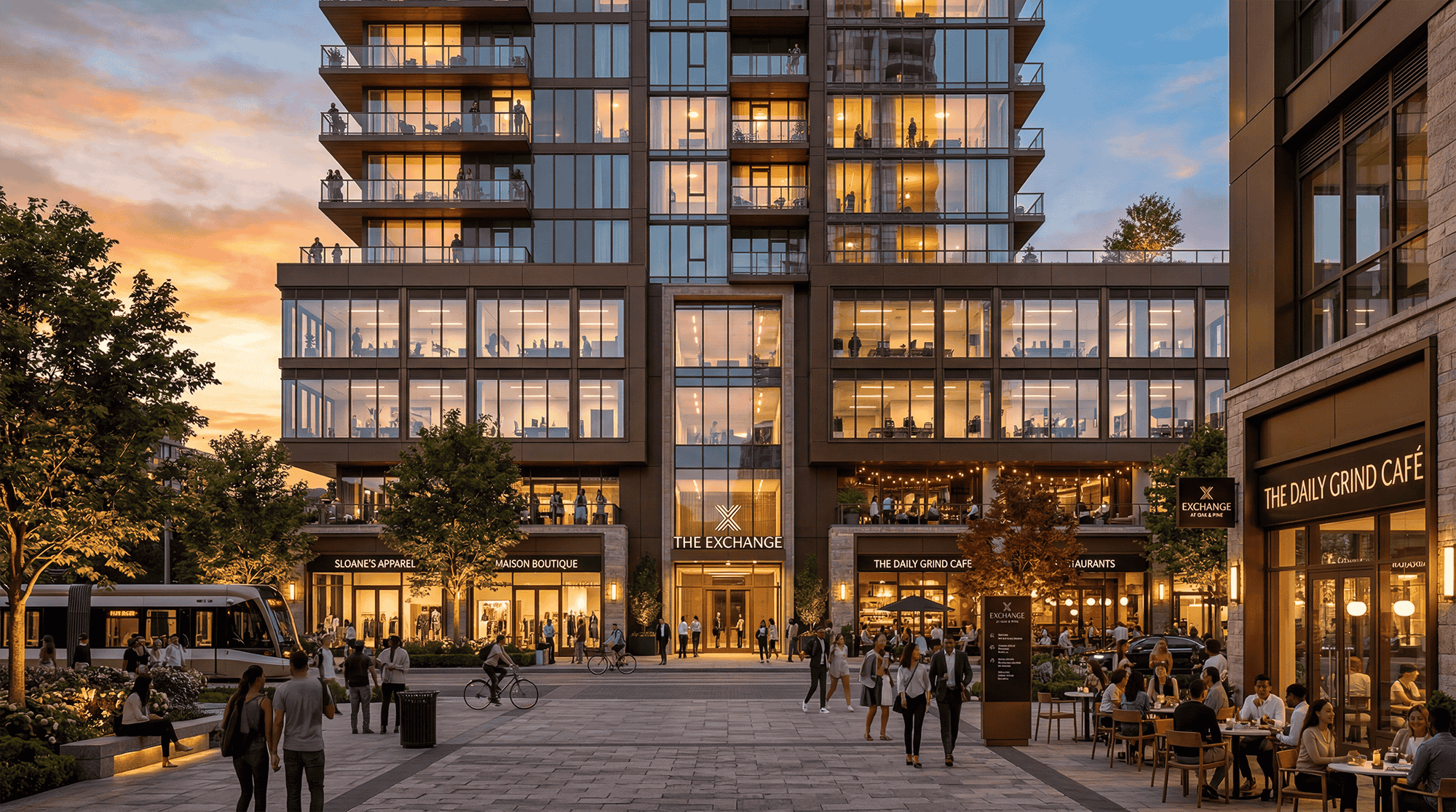
Mixed-use developments are the most complex branding challenge in real estate — and also the most rewarding to get right. You’re not branding a building. You’re branding a system of experiences that must feel coherent to residents waking up on the fifteenth floor, visitors arriving for Saturday lunch, office workers commuting through the lobby, and retailers trying to differentiate their offering within the wider precinct.
Get the brand strategy wrong and you end up with a development that’s technically mixed-use but experientially fragmented — a residential tower sitting above a retail podium sitting beside an office block, all sharing an address but nothing else. Get it right and you create something genuinely greater than the sum of its parts: a destination with a recognisable identity that drives premium pricing across every component.
Here’s how the process actually works, drawn from years of working on mixed-use projects across the Gulf.
Step 1: Start Before the Architects Do
The single most consequential decision in mixed-use brand strategy is when you start. If brand work begins after the masterplan is locked, you’re decorating rather than directing. The brand becomes a wrapper rather than a framework.
The ideal sequence positions brand strategy as an input to the design brief, not a response to it. This means initiating identity work during the feasibility and concept stages, when fundamental decisions about programme mix, spatial relationships, and experiential character are still fluid. At this stage, brand strategy doesn’t need to produce a logo. It needs to produce clarity — a clear articulation of who this place is for, what makes it distinctive, and what experience it should deliver.
Step 2: Define the Organising Idea
Every successful mixed-use development has what we call an organising idea — a central concept that connects all components into a coherent whole. This isn’t a tagline. It’s a strategic principle that guides decision-making across disciplines.
The organising idea answers a deceptively simple question: What holds this place together beyond the property line? In developments where residential, commercial, retail, hospitality, and public realm all coexist, the organising idea provides the connective tissue that prevents the experience from fragmenting into disconnected zones.
This idea must be grounded in something real — site context, cultural identity, community character, or environmental conditions. In the Middle East, where climate fundamentally shapes how people use space, the organising idea often relates to how the development creates conditions for human connection in a challenging environment. It might centre on the relationship between indoor and outdoor life, the integration of traditional social patterns with contemporary urban living, or the creation of microclimates that extend usable public realm hours.
Step 3: Map the Stakeholder Ecosystem
Mixed-use developments serve audiences with genuinely different — sometimes competing — needs. Residents want tranquillity; retail tenants want foot traffic. Office occupiers want efficiency; visitors want discovery. The brand strategy must acknowledge these tensions rather than pretend they don’t exist.
Effective stakeholder mapping goes beyond demographic profiling. It examines how different user groups move through the development at different times of day and week, where their paths intersect, and what each group needs from those intersections. These overlaps are where the development’s character is most powerfully expressed — and where brand strategy can create the most value.
Step 4: Develop the Experience Architecture
This is where brand strategy becomes spatial strategy. Experience architecture defines the sequence of impressions, interactions, and transitions that different users encounter as they move through the development. It identifies signature moments — the experiences that people will remember and describe to others — and ensures these are distributed across the development rather than concentrated in one zone.
In mixed-use contexts, the transitions between uses are often more important than the uses themselves. The moment where retail meets public realm. The threshold between the commercial ground floor and residential lobby. The connection between parking and first impression. These transitions either reinforce the brand or fracture it. Experience architecture designs them deliberately.
Step 5: Create the Brand Platform
With the organising idea established, the stakeholder ecosystem mapped, and the experience architecture defined, you now have the foundation for a brand platform — the strategic document that guides all subsequent expression.
A robust mixed-use brand platform typically includes an identity narrative articulating the development’s authentic character and positioning. It defines experience principles that guide design decisions across all components. It establishes a tone of voice and communication framework. And it provides spatial character guidelines that ensure the physical environment expresses the brand consistently without monotony.
Note what’s absent so far: logos, colour palettes, and typography. These are outputs of the brand platform, not inputs. They arrive in Step 6 — the expression phase — where the strategic framework is translated into visual identity, environmental graphics, wayfinding systems, and marketing materials.
Step 6: Orchestrate Expression Across Components
The expression challenge in mixed-use is calibrating brand visibility across components that need to feel connected without feeling identical. A residential lobby shouldn’t look like a retail concourse. An office entrance shouldn’t feel like a hotel reception. Yet all should feel like they belong to the same place.
The solution is layered expression — a system where certain brand elements remain consistent across the development (wayfinding logic, material palette, spatial rhythm) while others flex to suit specific contexts (signage density, lighting character, programming tone). Think of it as the difference between a uniform and a dress code. The brand provides the code; each component interprets it appropriately.
Step 7: Activate and Evolve
Brand strategy for mixed-use doesn’t end at handover. Activation strategy — programming, events, community building, seasonal initiatives — is where the brand comes alive in the daily experience of the development. Without deliberate activation, even well-branded developments can feel static.
The most effective mixed-use developments treat activation as brand expression, not separate from it. Every event, every seasonal installation, every community initiative either reinforces or dilutes the brand. When activation is aligned with brand strategy, it creates a virtuous cycle: consistent experience builds recognition, recognition builds loyalty, loyalty builds community, and community creates the distinctive character that attracted people in the first place.
The Regional Advantage
The Middle East’s master-developer model offers a structural advantage for mixed-use brand strategy that most global markets can’t match. When one entity controls the entire development — from masterplan through to ongoing management — the coordination challenges that plague multi-owner developments elsewhere are significantly reduced. This is a competitive edge, but only if developers use it to achieve genuine brand coherence rather than simply consistent signage.
The region is also experiencing a notable shift in mixed-use design philosophy. As Gensler’s Middle East practice and others have observed, there’s a move away from enclosed mega-developments toward more open, contextually responsive projects that reconnect with the region’s architectural heritage of souks, courtyards, and shaded pedestrian networks. This shift creates rich territory for brand strategies grounded in authentic regional identity rather than imported international concepts.
The Conversation Worth Having
If you’re developing a mixed-use project and brand strategy isn’t yet part of the conversation, it’s not too late — but it does get harder and more expensive the longer you wait. The earlier brand thinking enters the process, the more it shapes outcomes rather than describing them.
And if brand strategy is already underway, the diagnostic question is simple: Does your brand platform inform design decisions across all components, or does it sit in a PDF that marketing references and everyone else ignores? The answer reveals whether you’re building a brand or building a brochure.
Like What Your Reading?
These articles are a small part of our research and strategic advisory Services. Get in touch with Creative Dialog today to see how we can distill these insights into actionable strategies and solutions to improve the visitor experience across your destination.
Looking for deeper analysis of the Visitor Experience economy?
Read more over at Extended Dialog.